茜茜公主
"굳이 야자수농장에서"…범죄가능성 작다지만 계속되는 의문들(종합)_我的网站

A | 주민 "시신 있었을 것이라 짐작도 못해"…경찰 "야자수 줄기서 장씨 소유 끈 발견" 시신 발견 현장 출입 통제하는 경찰(제주=연합뉴스) 박지호 기자 = 지난 24일 제주시 한림읍에서 수개월 전 실종됐던 장미란씨의 시신이 발견됐다. 경찰이 시신이 발견된 수원리의 야자수 농장의 출입을 통제하고 있다. 2026.8.24 [email protected] (제주=연합뉴스) 박지호 전지혜 기자 = 제주에서 장기 실종됐던 장미란(37)씨가 숙소 인근 야자수 농장에서 숨진 채 발견되자 경찰은 범죄 피해 가능성이 작은 것으로 본다고 밝혔지만, 의문은 계속되고 있다. 26일 제주경찰청 등에 따르면 장씨 시신은 지난 24일 오전 제주시 한림읍의 한 야자수 농장에서 수색 중이던 경찰에 의해 발견됐다. 경찰은 시신이 처음 발견된 당시 자세와 위치 등을 바탕으로 장씨가 목을 매 숨진 것으로 추정한다고 밝혔다. 해당 농장에는 약 3∼6m 높이 야자수가 빼곡히 들어서 있다. 나무 줄기를 베어낸 자리는 손을 대보니 툭툭 부러지기도 했다. 시신발견 장소 옆 지나는 도보여행자들(제주=연합뉴스) 박지호 기자 = 도보여행자들이 26일 제주시 한림읍의 장기실종자 장미란씨 시신이 발견된 야자수농장 옆을 지나고 있다. 2026.8.26 [email protected] 주민들은 이곳에서 실종자가 발견될 것이라고는 생각도 하지 못했다고 말했다. 이날 오전 현장 인근에서 농작업하고 있던 70대 A씨는 "6월께부터 계속 여기서 작업 해왔다. 여러 명이 같이 일을 하는데, 아무도 이상한 냄새가 난다든지 하는 걸 몰랐다"고 말했다. 그는 또 "주변 밭에 거름을 주는 경우도 많고, 최근에 바람이 대체로 바다 방향으로 불었기 때문에 야자수 농장에 시신이 있었을 것이라고 짐작도 하지 못했다"고 말했다. 이어 "야자수 농장 바로 옆에 있는 밭 주인이 얼마 전 작업하러 왔다 가기도 했지만, 그 사람도 알지 못했던 듯 하다"고 전했다. 또한 주민들은 해당 야자수 농장 인근에는 비닐하우스와 밭 뿐이며, 폐쇄회로(CC)TV는 커녕 가로등도 없어 야간에는 인적이 드물다고 전했다. 한 주민은 "그쪽은 조명이 없어서 밤이 되면 엄청 깜깜하다. 차는 헤드라이트가 있어서 다닐 수 있지만, 야간에는 사람이 걸어다니진 않는다"고 말했다. 인근을 지나던 도보여행객들도 "여긴 아무도 모를 수 있겠네"라고 말하기도 했다. 쉽게 꺾이는 베어낸 야자 줄기(제주=연합뉴스) 박지호 기자 = 26일 제주시 한림읍의 장기실종자 장미란씨 시신이 발견된 야자수농장의 베어낸 야자 줄기가 손으로 쉽게 꺾이고 있다. 2026.8.26 [email protected] 뾰족하게 돌출된 부분이 많은 야자수가 빼곡한 곳에서 실종자가 발견된 데 대한 의문도 제기된다. A씨는 "야자수 줄기를 잘라낸 부분은 엄청나게 날카롭다. 거기 몸이 닿으면 아파서 잠시도 참지 못한다"며 거기서 극단적 선택을 했다는 게 이해가 되지 않는다고 말했다. 한 온라인 커뮤니티에서도 자신이 시신 발견 장소에서 500m 거리에 거주한다고 밝힌 한 누리꾼이 의문을 제기했다. 해당 누리꾼은 현장 사진과 함께 "카나리아 야자수는 뾰족하고 단단한 가시같은 부분이 엄청 많으며, 일반 나무처럼 가지가 있는 것이 아니라서 목을 매려 줄을 걸기가 거의 불가하다"고 밝혔다. 그러면서 "여자 혼자 나무에 줄을 묶고 목을 매기가 과연 가능했을지 의문이다. 설사 묶었다 해도 가시에 찔리는 고통이 훨씬 더 컸을 것"이라며 의문점이 많다는 의견을 제시했다. 도내 한 조경업체 관계자도 "카나리아 야자수는 가시가 많아서 조경업자들도 다루기가 어려운데, 여성이 혼자 거기서 극단적 선택을 하는 것은 아주 어려운 일"이라고 말했다. 경찰은 시신이 발견된 직후부터 "범죄 피해 가능성이 높지 않은 것으로 판단하고 있다"고 밝혔다. 전날 진행한 부검을 마친 뒤에도 "시신이 부패가 상당히 진행돼 외상 흔적 등은 확인할 수 없다"면서도 "특이 골절 등은 발견되지 않았다"고 밝히기도 했다. 경찰은 "부검의가 목을 매 숨진 것으로 추정된다는 구두 소견을 냈다"며 "또 현장 감식 결과 야자수나무 상단에 삐져나온 줄기에서 장씨 소유 끈이 발견됐다"고 설명했다. 또 시신이 발견된 곳에서 저항이나 다툼 흔적은 발견되지 않았고, 외출 당시 입었던 옷이나 슬리퍼, 금팔찌와 반지 등도 모두 그대로 착용된 상태였다고 전했다. 다만 아직 유서는 발견되지 않았으며, 우울증 치료나 관련 약 처방 내역도 확인되지 않았다고 덧붙였다. 아직 사망 시점과 사인 등이 정확히 밝혀지지 않은 가운데 경찰은 모든 가능성을 열어두고 조사 중이며, 현장에서 발견된 휴대전화 포렌식을 통해 고인의 마지막 행적을 파악하는 데도 주력하겠다고 밝혔다. 실종 장미란씨 시신 발견(제주=연합뉴스) 박지호 기자 = 경찰이 지난 24일 제주시 한림읍 수원리의 한 야자수농장에서 수개월 전 실종됐던 장미란씨 시신을 발견해 현장 감식을 진행하고 있다. 2026.8.24 [email protected] [email protected]。
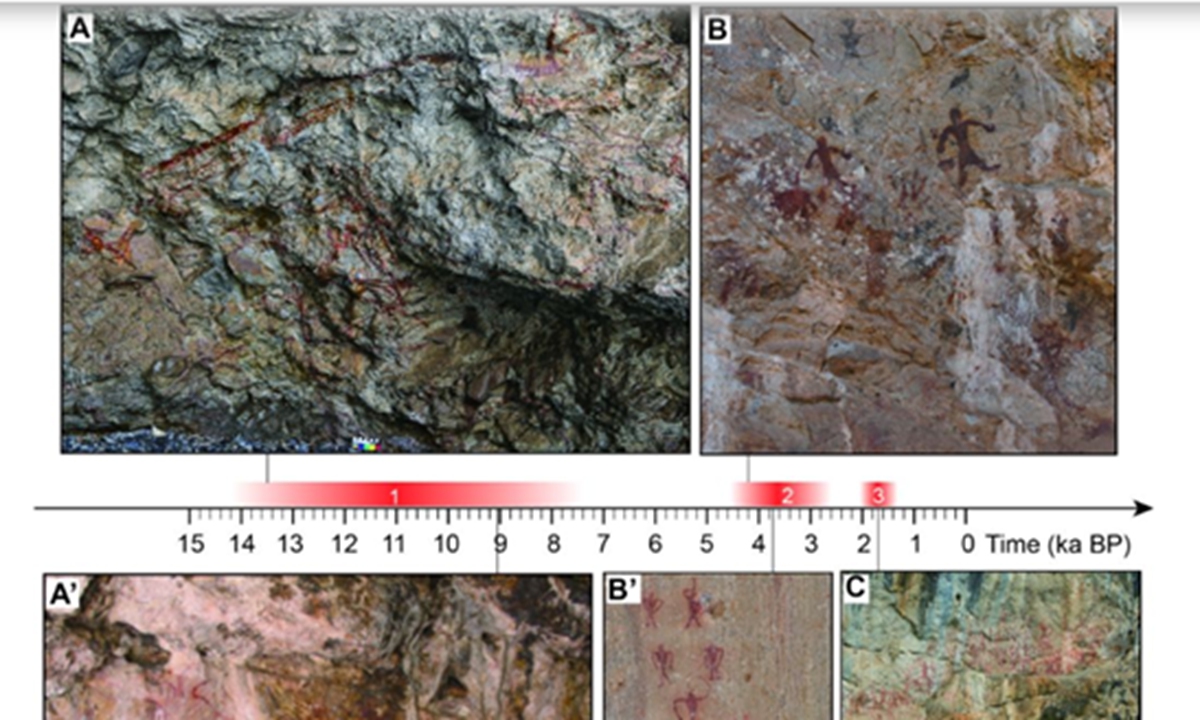
Timeline of the major painted rock art groups in Southwest China: A-A′: Jinsha River rock art; B-B′: Mangguan-Cangyuan rock art; C-C′: Zuojiang rock art Photos: Xinhua
Chinese researchers have obtained the first absolute dates for rock paintings at the Mangguan rock art site in Southwest China's Yunnan Province, pushing the known history of rock art created by prehistoric settled communities in the region back to about 4,220 years ago. The paintings also suggest cultural interactions more than 4,000 years ago between Southwest China and civilizations along the Yellow and Yangtze rivers, as well as possible exchanges with neighboring parts of Southeast Asia, including present-day Myanmar, Thailand and Vietnam, a member of the research team told the Global Times.
The Yunnan Provincial Institute of Cultural Relics and Archaeology, in collaboration with Nanjing Normal University and other institutions, have recently made a significant archaeological breakthrough. Through systematic surveys and uranium-thorium (U-Th) dating at the Mangguan site in Gengma county, the research team obtained the first absolute dates for the site's rock paintings, tracing rock art created by prehistoric settled communities back to around 4,220 years ago.
The findings were recently published in the international journal
Journal of Archaeological Science: Reports.
The Mangguan rock paintings represent one of the best-preserved prehistoric rock art sites in Yunnan. The research team presented high precision U Th dating of carbonate accretions that stratigraphically overlie the painted motifs at the Mangguan site, according to the paper published in the journal.
The dating results show that carbonate deposits overlying a human figure yielded a corrected age of 4,240 ± 19 years before present, confirming that ancient people living in the region had already produced mature figurative art at least 4,220 years ago, Wu Yun, first author of the paper and an associate researcher at the Yunnan Provincial Institute of Cultural Relics and Archaeology, was cited by the Xinhua News Agency report as saying.
Dating results from 11 samples taken from different motifs clustered between about 3,907 and 3,056 years ago. By comparison, the Cangyuan cliff paintings had previously been dated to roughly 3,800 to 2,700 years ago. The Mangguan paintings are therefore significantly older, filling an important chronological gap in the region's artistic record before the Cangyuan phase.
Shao Qingfeng, corresponding author of the paper and a professor at the School of Geography at Nanjing Normal University, told the Global Times that previous estimates dated the Mangguan rock paintings to a little over 3,000 years ago based mainly on imagery and comparisons with similar regional sites. Using microsamples of secondary carbonate deposits overlying the paintings, researchers have now obtained a precise minimum age of about 4,220 years before present without damaging the rock art.
The findings and the establishment of this chronological framework not only strengthen the archaeological foundation for studying rock art in Southwest China, but also provide a direct reference for rock art sites across Southeast Asia that have yet to undergo systematic dating, Shao said.
The findings may also challenge long-held perceptions of Southwest China around 4,200 years ago - roughly the era of the Xia Dynasty (c.2070 BC-C.1600 BC) - and help fill a key gap in understanding the pluralistic yet integrated development of Chinese civilization.
Shao said that while academic research has traditionally focused on the Yellow River and Yangtze River basins as cradles of early Chinese civilization, sites such as Mangguan and Cangyuan show that stable and culturally active communities also thrived in mountainous Southwest China. The newly established rock-art chronology brings an artistic dimension to the broader narrative of China's enduring cultural development.
Moreover, stylistic similarities suggest that Southwest China maintained exchanges with the Yellow River and Yangtze River regions and with early societies in Southeast Asia, providing material evidence of cross-regional interaction more than 4,000 years ago.
。
Current article:http://rbr8o7.cuntoujuefourantapai.cfd/axq5l7/gx0ued0.html
Published on:02:34:27